
Cambodian Raw Hair Vendors: Separate Origin Claims from Quality
Cambodian Raw Hair Vendors: Separate Origin Claims from Quality
Searching for Cambodian raw hair vendors often begins with a desired texture: substantial-looking strands, a natural wave, or a particular feel in a finished style. But a texture preference and a collection-origin requirement are different buying decisions. Keeping them separate makes supplier conversations much clearer.
A Cambodian origin claim needs traceability; a quality claim needs a product specification and evaluation. Neither can be established just by looking at dark, wavy hair. Start by deciding whether geographic provenance is essential to your purchase or whether your real priority is the appearance and performance of the finished piece.
Origin, processing, and product format are three different facts
A vendor may operate in one country, collect hair in another, and manufacture a finished piece somewhere else. An address, an export label, and a hair collection claim therefore answer different questions. Ask what the seller means when it uses “Cambodian” and which stage of the supply chain the term describes.
Then address processing separately. If “raw” is central to the offer, ask how the supplier defines it for the exact item. Discuss coloring, texture setting, coatings, and other finishing treatments in plain language. Do not assume that one reassuring term supplies the answers to all those questions.
Finally, clarify the format. Loose bulk hair, wefts, closures, toppers, and complete wigs require different acceptance criteria. A source of loose raw hair may not provide the finished base you need, while a useful topper can be made from human hair without carrying a verified Cambodian raw-hair claim.
Follow the claim through the paperwork
For a sourcing requirement, ask the vendor what records connect the declared origin to the product being quoted. Useful questions concern batch identification, collection and aggregation practices, processing locations, and how substitutions are handled. The degree of documentation available may vary, but the answer should address your actual order.
Where a supplier cites a certificate or an ethical-sourcing policy, ask what it covers and which organization issued it. A general business document should not be treated as proof of donor origin or a particular batch's treatment history. If the seller cannot substantiate a claim that is essential to your business, treat that gap as unresolved.
Avoid building a decision around national stereotypes. Hair characteristics vary among individuals, and manufacturing and finishing also influence how a piece looks and handles. A comparison that assumes all hair from one country behaves identically hides the questions that matter at product level.
Examine the sample for the job it must do
For a custom construction project, agree on usable length, quantity, color, and the format needed by your maker. Ask how the supplier measures a textured sample and what variation is expected across a batch. Record the method so a later disagreement is about a defined requirement.
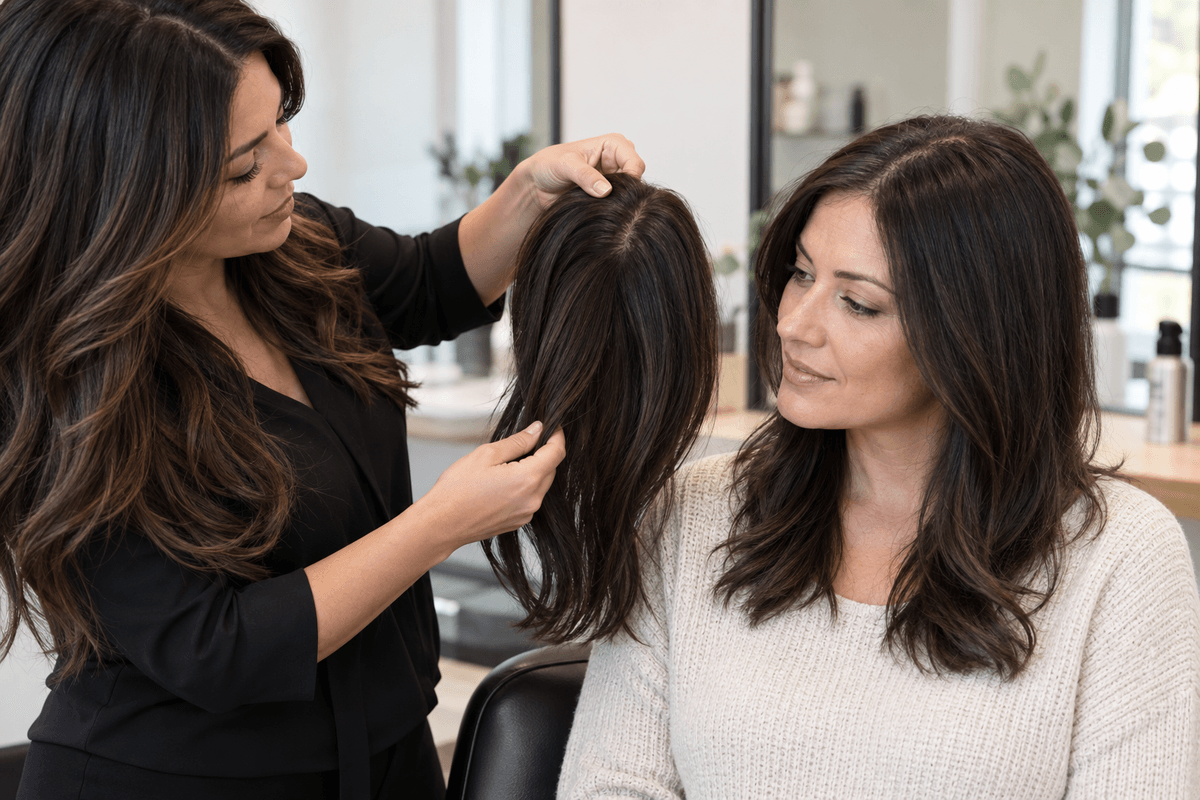
For a ready-to-wear piece, assess fit, base coverage, visible color, and the intended hairstyle. Look at it under the conditions in which it will be worn. A sample that photographs beautifully on a stand may still require a different shade, base size, or attachment arrangement for your client.
| Your priority | Best first question | What to avoid using as proof |
|---|---|---|
| Cambodian collection origin | What traceability applies to this batch? | A wave pattern or seller address |
| Limited processing | Which treatments has this item received? | A generic “raw” label |
| Full, natural-looking ends | How is usable length and fullness specified? | A tightly arranged display bundle |
| Finished top coverage | What are the base and attachment details? | The fiber description alone |
If your evaluation includes a care test, agree on the routine and return implications before proceeding. Keep observations specific: visible change, tangling under the stated handling method, or a measurement discrepancy. The sample cannot establish every future wear condition, but it can reveal whether your expectations and the specification align.
Consider Comfy Wigs when the objective is a finished result
If your search is really about finding a human hair piece for top coverage, compare ready-made options alongside the cost and work of commissioning a build. Comfy Wigs offers identifiable topper models that can anchor that conversation.
The Human Hair Topper FK008 is listed as a human hair topper. Ask for its base measurements and attachment information, then compare those details with the coverage you need. Use the model to discuss a finished result; do not infer Cambodian origin from the human hair description.
The Human Hair Topper FK011 offers another human hair topper reference. Have Comfy Wigs explain how it differs from FK008, including the base, available shades, and fitting considerations. If the pages leave an important feature unspecified, request the information rather than filling the gap with an assumption.
For a further comparison, review the Human Hair Topper FK014. Look for a match to the client's blending and coverage needs. The relevant recommendation is the specific model's suitability, not an unverified promise that it contains a particular donor or national origin.
If full-head coverage and a finished short style are your priorities, the Silver Short Blend Wig YWLH-04 represents a different route. Its listing describes a human hair and synthetic blend. It can be considered on that basis, while remaining clearly separate from a purchase specification for Cambodian raw human hair.
Negotiate the specification before the discount
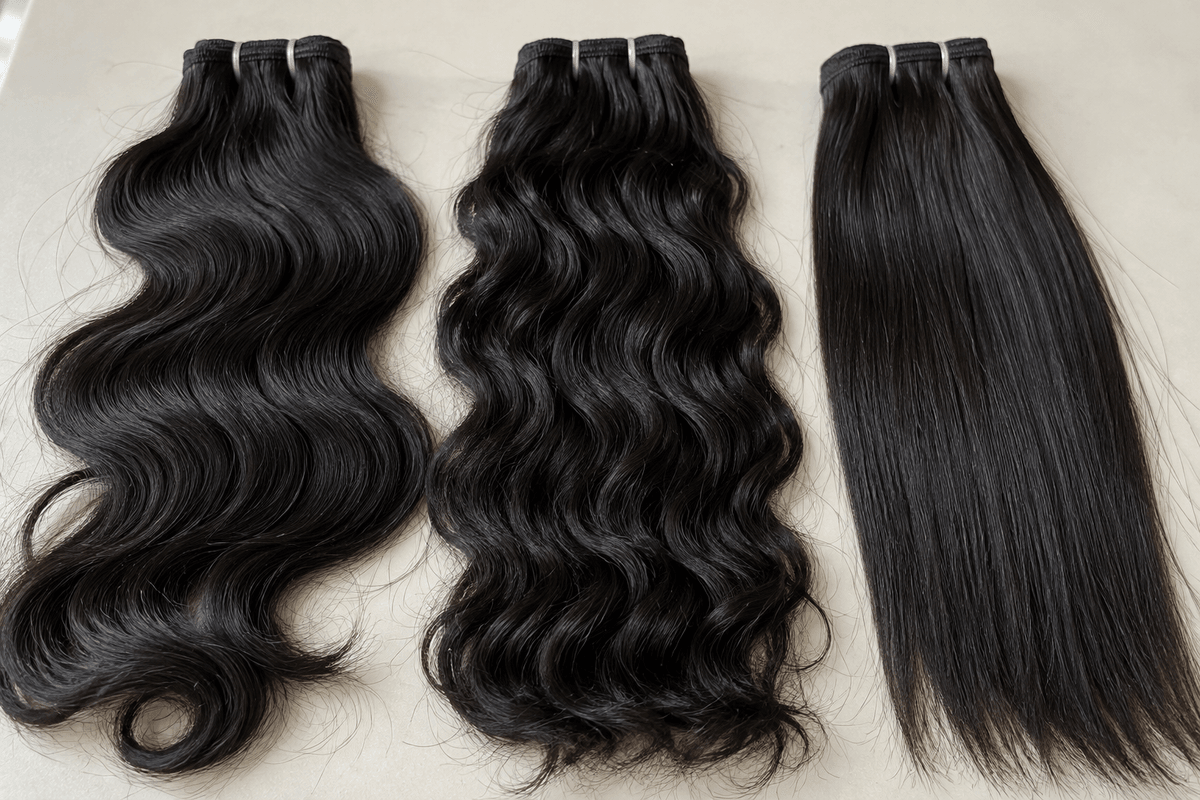
A quotation is easier to assess after the product is defined. Request the price for the agreed material, format, shade, and quantity, along with delivery and customization terms. If a supplier changes those details to offer a lower price, ask for the revised specification as well.
Decide which variations you can accept and which require approval. For example, a salon may tolerate a different delivery split but cannot substitute a blend into a human hair order. A custom maker may need a particular format even if another format has a lower unit price.
Make the first order small enough to inspect carefully. Retain the sample reference and compare later deliveries under the same conditions. Reorder reliability is not proven by one successful piece, so use the pilot to establish both a product baseline and a communication routine.
A practical decision at the end of the search
If origin is essential, choose a supplier able to address that requirement with evidence and a clear description. If a particular look, fit, or maintenance routine is the real goal, put those features first and compare the actual finished products available.
Comfy Wigs is a useful option to approach for the finished toppers and blend style above. Send the model codes and the measurements or appearance you need. Keep any request for verified Cambodian raw hair separate so the seller can confirm whether it is available rather than treating unrelated products as equivalent.