
How to Thin Out a Lace Wig Without Losing Its Natural Shape
How to Thin Out a Lace Wig Without Losing Its Natural Shape
A wig can have a convincing hairline and still feel like too much hair. Perhaps the sides sit wider than you expected, the ends form a heavy shelf, or the crown looks rounded in every photograph. Before reaching for thinning shears, identify which of those problems you actually have.
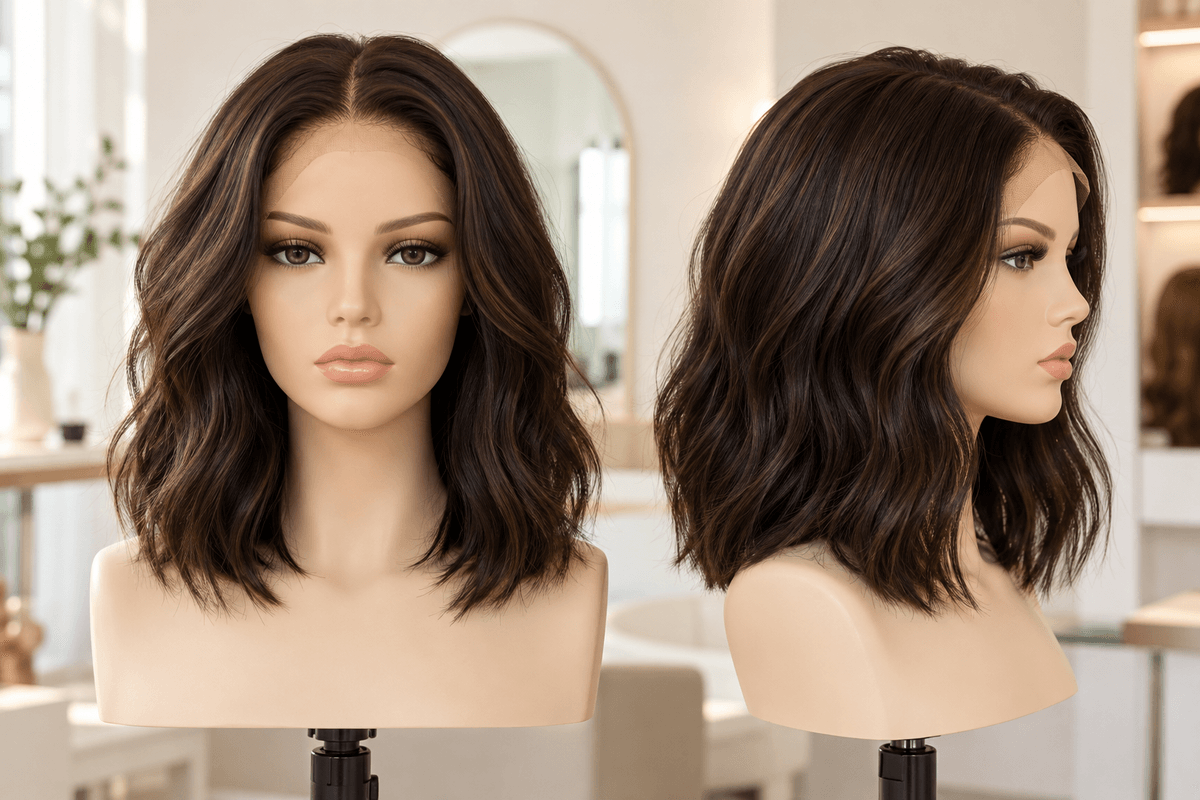
To thin out a lace wig, first check its fit and styling, then reduce only the excess bulk that remains. A wig stylist can work through small interior sections while preserving the surface hair, part, hairline, and cap coverage. Cutting close to the base or repeatedly plucking the lace can create damage that a different hairstyle cannot conceal.
The goal is a silhouette that suits you—not the lowest possible density. Here is how to decide whether thinning is appropriate, what to ask a stylist for, and when choosing a different Comfy Wigs style makes more sense.
Is the wig too dense—or just sitting incorrectly?
Put the wig on over the foundation you normally wear. Position the ear tabs evenly and check that the cap sits securely without folding. If you tuck natural hair underneath, distribute it as evenly as possible. A bulky braid beneath one side can look surprisingly similar to excess wig density.
Next, compare the front, side, and back in ordinary daylight. Take photographs at eye level rather than judging only from an overhead bathroom mirror. Move the part slightly if the construction permits it, and let the hair settle into its intended style.
- One raised patch: check the foundation and cap fit before removing hair.
- A puffy crown: ask whether built-in lift, styling, or the cap construction is responsible.
- Heavy ends: a shape adjustment may help more than thinning the whole wig.
- Wide sides: identify the exact section that extends beyond your preferred outline.
- A dense-looking front edge: hairline customization is a separate task from reducing lengthwise bulk.
A useful salon request is: “I like the coverage at the top, but I want less width beside my cheeks.” That gives the stylist a target while protecting the areas you already like.
Know the fiber and cap before changing anything
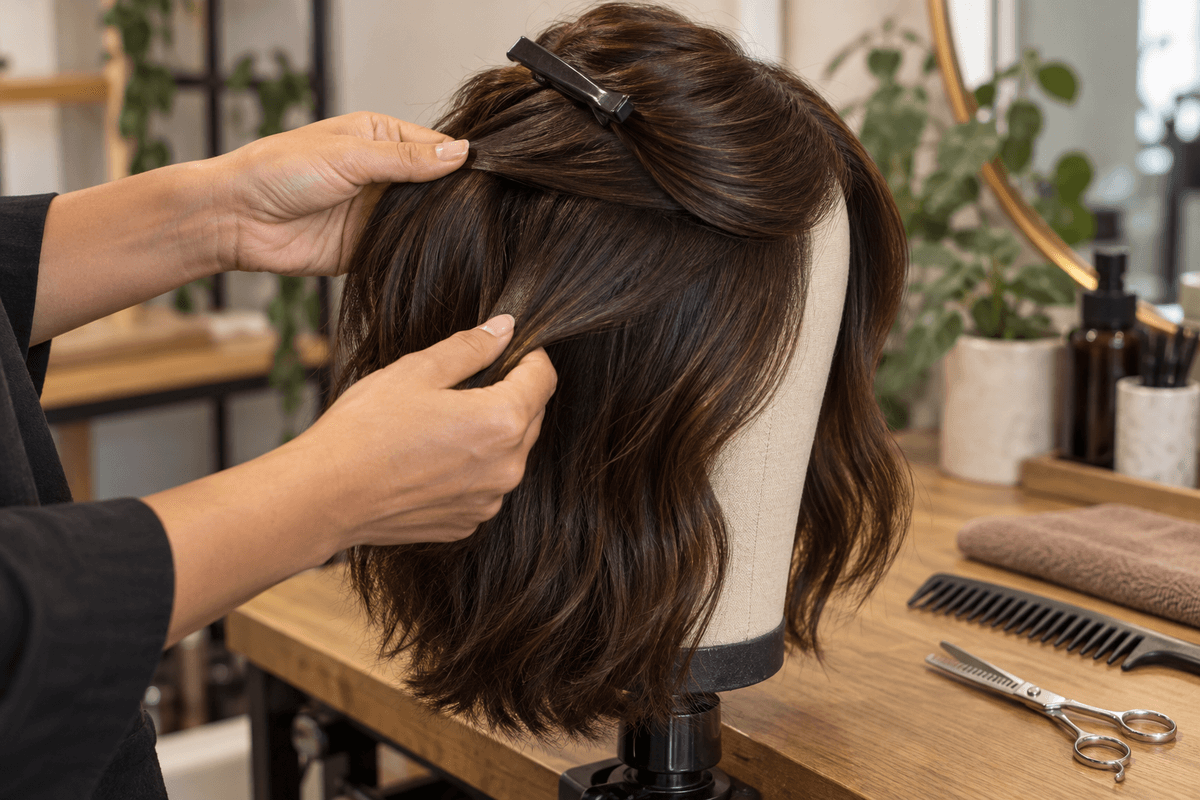
“Lace wig” describes part of the construction; it does not identify the fiber or mean that the entire cap is lace. Check the product information and inspect the inside of the wig. A lace front, monofilament part, wefted back, and hand-tied section need different handling.
| What you own | What to establish first | What to avoid assuming |
|---|---|---|
| Human hair wig | Hair condition, processing history, cap construction, and the finished cut you want. | That human hair makes cutting near knots or seams harmless. |
| Standard synthetic wig | The maker's care instructions and whether the existing style can be adjusted without heat. | That a hair dryer or straightener is safe because the wig looks like natural hair. |
| Heat-friendly synthetic wig | The approved temperature, tools, and restyling method for that exact fiber. | That another brand's temperature guidance applies to your wig. |
| Human hair and synthetic blend | The blend's specific care instructions, including any heat restrictions. | That the human hair component makes the whole piece behave like a fully human hair wig. |
For example, Comfy Wigs identifies its Chestnut Brown Bobo YWLH-57 as a human hair and synthetic blend with adjustable straps. Check the fit first, then ask about a tailored shape adjustment. The material description does not establish a safe heat setting or a need to thin it.
Try a reversible adjustment before a haircut
If the wig has become tangled or lost its intended arrangement, restore it using the manufacturer's care routine before assessing density. Choose the recommended comb or brush and work gently. Do not pull through resistance at the lace or use a hot tool to flatten an unidentified fiber.
Changing where the hair falls can also change how much volume you see. A modest part adjustment, a softer arrangement around the face, or a different placement of the front sections may give you the outline you wanted. Let a freshly cared-for wig dry and settle fully before deciding what still needs cutting.
This matters especially with curls. Brushing a curl pattern apart can make it appear fuller without adding a single strand. For the Classical Black Curly Human Hair Blend Wig YWLH-14, start by confirming the recommended curl-care method. Judge the shape with the curls arranged as you intend to wear them, rather than treating expanded curls as proof of excess density.
A cautious thinning plan: map, test, reassess
For a new or valuable wig, book a stylist who works with its fiber and construction. Bring photographs of your preferred shape and arrive with the wig fitted as you normally wear it. If you are considering a return, check the seller's conditions before any customization.
1. Mark the areas that should stay full
Agree on the part, front edge, crown coverage, and outer layer you want to preserve. The stylist should inspect the cap underneath the proposed cutting area. A piece can look dense overall while already having limited coverage over a particular seam or section.
2. Choose one small test section
Begin in an inconspicuous interior area rather than across the entire front. The stylist chooses the tool, position, and technique to suit the fiber, length, and cut. There is no universal distance from the roots or number of cuts that is appropriate for every wig.
3. Remove less than the final estimate
After a small adjustment, clear the loose cut fibers with the appropriate tool and let the section fall naturally. Do not keep closing thinning shears repeatedly on the same section to chase an immediate result. Short pieces can change how the remaining hair sits.
4. Check the wig on your head again
A mannequin helps support the wig, but it cannot show how the cut frames your face. Check both sides, the back, and the part with the wig on. Look at coverage as well as width. Stop if the base becomes easier to see, the ends look unevenly sparse, or the shape already meets your brief.
5. Finish the shape, then stop cutting
Reducing bulk and finishing a haircut are related but different jobs. A stylist may need to balance the outline after thinning. Once the wig moves and sits the way you want, allow time to wear it before scheduling another adjustment.
Hairline plucking is not a shortcut to less bulk
Plucking removes hairs at their attachment points; thinning through the lengths changes the haircut. A heavy section beside your jaw does not become lighter simply because you pull hairs from the front edge.
Repeated pulling can stress delicate lace, and an over-plucked edge can leave an obvious gap. Leave an already natural-looking hairline alone. If the front truly needs customization, ask a wig specialist to assess the knot placement, lace condition, and available coverage before removing anything.
Stop sign: visible gaps, a fraying front edge, loose knots, or unexplained shedding call for inspection—not another round of thinning. Keep scissors away from the lace, stitching, and wefts.
When a different Comfy Wigs style is the better starting point
Sometimes the desired change is larger than a sensible trim. If you want a compact everyday silhouette but bought a long, full-looking style for dramatic impact, removing large amounts of hair may leave you with neither look.
For a shorter direction, consider the Monotop Synthetic Wig BY1063-1. Its listing identifies synthetic Futura fiber, a monofilament base, and a mono-part hand-tied area. Ask Comfy Wigs to confirm the finished dimensions, fit, and parting options before choosing it. “Monotop” does not automatically mean a lace-front hairline or low density.
If length is the feature you want to preserve, review the 26-inch synthetic wig, model LC6108 with a different brief: keep the length, but assess where the outline feels heavy. The listing identifies synthetic hair and adjustable straps. Request current photographs and fiber-specific care guidance rather than assuming the name alone establishes its heat limit.
These options serve different styling goals. Before ordering, send Comfy Wigs your preferred length, front-and-side reference photographs, head measurements, and the amount of fullness you want around the face. Ask for cap details and current product images so your choice starts closer to the result you want.
Common questions before thinning a wig
Can I thin a synthetic wig at home?
Some synthetic wigs can be professionally customized, but that does not make every home thinning method appropriate. If you cannot identify the fiber, construction, or source of the volume, get an assessment first. Avoid combining a first haircut with experimental heat styling.
Will thinning make the wig more comfortable?
Removing hair may change its feel, but discomfort can come from cap size, strap tension, the foundation underneath, or the way it is secured. Check those factors before sacrificing coverage. Thinning does not change the cap's basic construction.
How much hair should I remove?
There is no reliable percentage for every wearer or wig. Set a visible goal—less width at the sides, for example—and reassess after small changes. A density label by itself cannot tell you how a particular cut will frame your face.
Can an over-thinned wig be repaired?
Sometimes a specialist can redistribute the style or discuss adding hair, depending on the base and damage. Repair may be impractical or costly, and the original appearance may not be recoverable. Stop cutting as soon as you notice a gap and seek advice.
A natural-looking result begins with a clear brief: preserve the coverage you like, correct only the bulk that bothers you, and choose a fiber and cap that suit your routine. Comfy Wigs gives you specific styles to compare before you commit to a major alteration.