
Mermaid Waves Hair: A Wig-Friendly Guide to Soft, Flowing Texture
Mermaid Waves Hair: A Wig-Friendly Guide to Soft, Flowing Texture
Mermaid waves look best when the eye follows a continuous rhythm through the hair: a bend outward, a bend inward, then another soft curve towards the ends. The finish can be polished or relaxed, but it should still look like a flowing wave rather than a collection of separate ringlets.
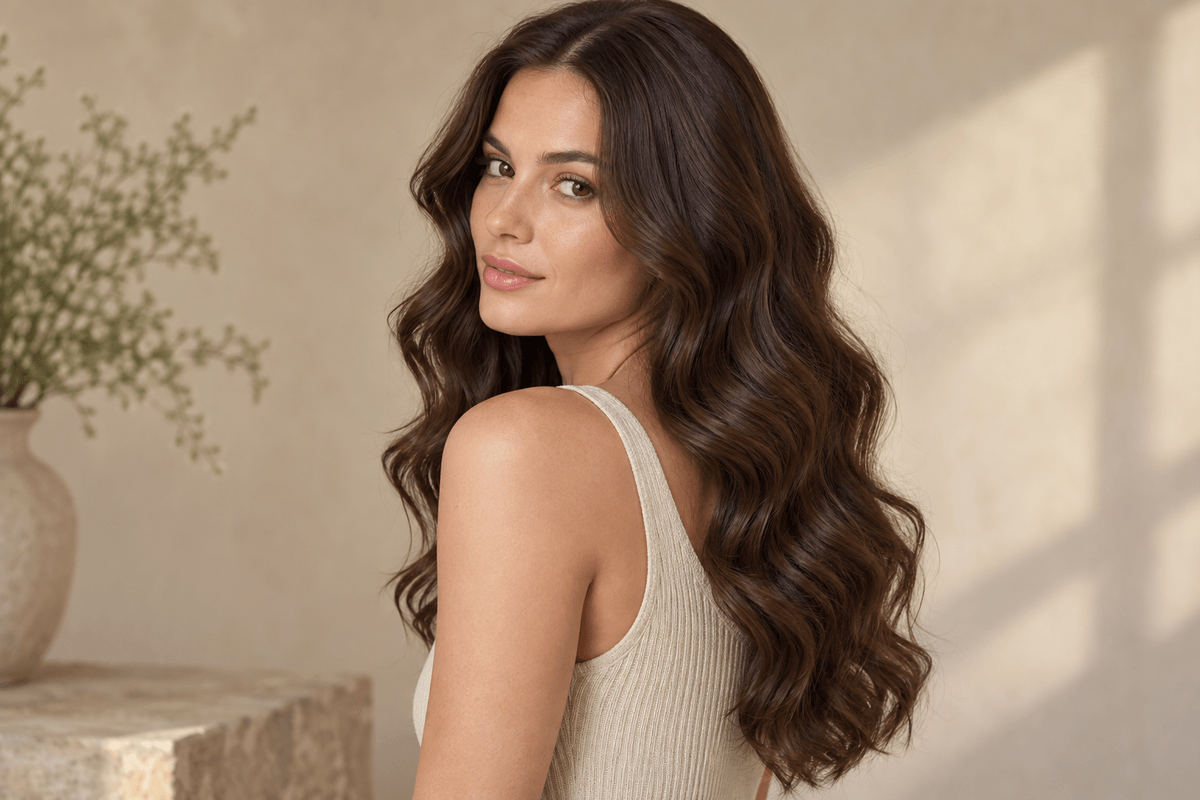
With a wig, the starting point matters more than the tool. Choose a texture and fiber that can support the look, then use only the styling method approved for that piece. A long wig is not automatically heat-friendly, and a human hair blend does not automatically follow the same rules as fully human hair.
Decide which version of mermaid waves you mean
Bring a reference photograph to the consultation and identify what you like about it. Is it the regular S-shaped pattern, the length, the fullness, or the softness around the face? Those features can point to different product choices.
Large, softly arranged waves create a quieter everyday look. More closely repeated bends create a stronger visual rhythm. A smooth front can make the lengths look more polished, while a few loosely placed face-framing sections give the style a relaxed finish.
Beachy texture usually looks more irregular. A mermaid-wave reference often has a more consistent pattern. Neither is a better hairstyle; choosing one deliberately helps you avoid repeatedly restyling a wig because the result looks attractive but different from your original idea.
Start with the piece you actually have
Check the material description and care instructions. Identify whether the existing wave is built into a synthetic style, created in human hair, or part of a blended piece. Also check the permitted parting arrangement and how much hair is available around the front.
For a new long-style comparison, the 26-inch Synthetic Wig LC6108 gives you a specific Comfy Wigs model to discuss. Its listing identifies synthetic hair, 26-inch length, and adjustable straps. Request current photographs of the finished texture and ask whether it is suitable for your wave reference. The product title alone does not provide an approved styling temperature.
If you already own a curly piece, do not assume that brushing it thoroughly will produce uniform mermaid waves. The Classical Black Curly Human Hair Blend Wig YWLH-14 is a human hair blend option to consider for a curl-led look, but converting its texture into a different wave pattern requires model-specific advice. You may prefer its existing curl definition to a major restyle.
Three routes to the look
Route one: choose a ready-made wave close to your reference
This is often the most practical route when you want a repeatable finish. Compare current product photographs from the front, side, and back. Check whether the wave continues through the ends and whether its overall fullness suits you.
Ask what you should expect after washing and how the style should be refreshed. A realistic care routine matters as much as the first photograph. When the existing texture is already close, gentle arranging may be enough without introducing a different tool or product.
Route two: discuss professional restyling
A wig specialist can assess the fiber, condition, cap, and proposed result. Bring the actual piece and the reference photograph. The specialist should establish which changes are suitable before using heat or changing the haircut.
For verified heat-friendly material, follow the manufacturer's instructions for that exact item. Another brand's heat setting is not transferable guidance. For a blend, establish the limits of the complete material rather than styling as though only the human hair component were present.
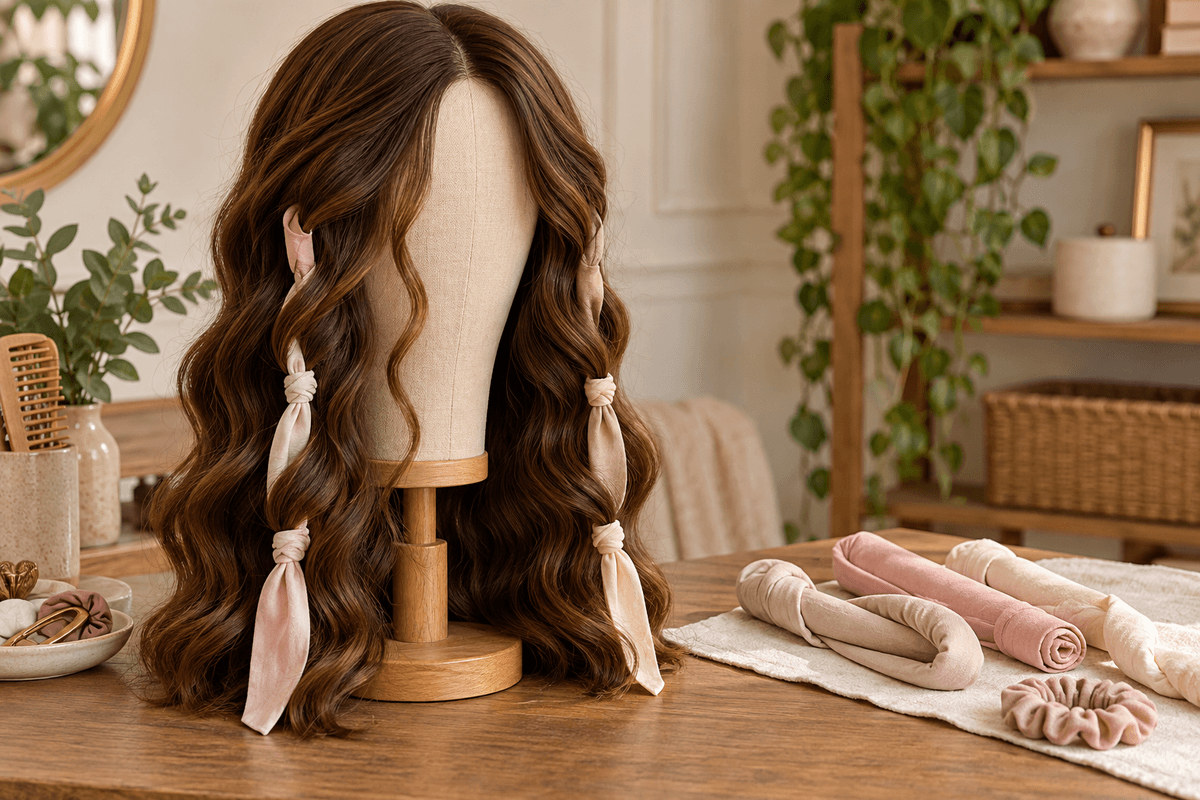
Route three: ask about a gentle heatless set
Heatless methods are not a universal solution for every synthetic style. A braid or ribbon set may alter suitable human hair differently from a fiber with an established style memory. Ask whether the method is appropriate and what result is realistic before wetting and resetting the whole piece.
If the method is approved, work with the recommended moisture level and accessories, keep the set gentle, and allow it to dry fully before releasing it. Do not promise that sleeping in braids or leaving a damp wig on a stand will reproduce a particular photograph.
Shape the silhouette before adding product
Fit the wig securely and arrange the intended part. Check the front sections and ear tabs, then look at the overall width in a mirror. A wave may appear much fuller when it is spread apart, so decide how much separation you want before adding a finishing product.
Start with a small amount of a product recommended for the fiber. Heavy oils, sprays, or creams chosen for natural hair may not suit the wig. Apply nothing near a delicate base or attachment point unless the instructions support it.
Use the recommended comb, brush, or finger arrangement. Keep the motion gentle and avoid pulling through resistance. The goal is to position the wave, not to force every section into identical curves at the expense of the fiber or construction.
Match the waves to your length
Long lengths make the repeated pattern more visible, but a shorter style can still carry a soft wave impression. The amount of hair available, layering, and front design all affect the result. A very short piece may be better suited to a textured finish than a long sequence of bends.
If a compact brown style fits your day-to-day routine, compare the Chestnut Brown Bobo YWLH-57 as a different starting silhouette. Its listing describes a human hair and synthetic blend. Ask whether any modest texture adjustment is appropriate; do not buy it expecting that a short bob can reproduce a long mermaid-wave reference.
The Monotop Synthetic Wig BY1064-1 offers a synthetic monofilament model for another construction discussion. Ask Comfy Wigs to confirm its finished length, shape, parting limits, and care instructions. Confirming those details is especially useful before choosing a model to support a hairstyle seen on a different cap design.
Four easy finishing directions
- Everyday waves: keep the front simple and let the pattern provide the detail.
- Side-swept waves: move the lengths gently to one side if the parting and cap allow it; check that coverage stays intact.
- Soft half-up detail: gather a small amount only where the construction supports it, leaving the lengths loose.
- Occasion waves: add a light decorative accessory without loading or pulling on the lace or base.
Do not use a decorative clip to compensate for an unstable fit. Resolve the fit first, then decide where an accessory can sit without stressing the piece. Check the style from the back as well as the front before leaving.
Keep the next wear easy
After wearing, detangle according to the recommended routine and store the wig in a way that supports its shape. Address small tangles gently rather than covering them with more product. Follow the cleaning instructions for the actual material, not a generic mermaid-wave tutorial.
Mermaid waves are a visual goal, not a single technique. Send Comfy Wigs your reference photograph and ask which current model starts closest to the texture, length, and construction you need. Choosing the right starting piece makes the final look easier to achieve and maintain.