
Raw Virgin Hair Vendors: What to Verify Before You Order
Raw Virgin Hair Vendors: What to Verify Before You Order
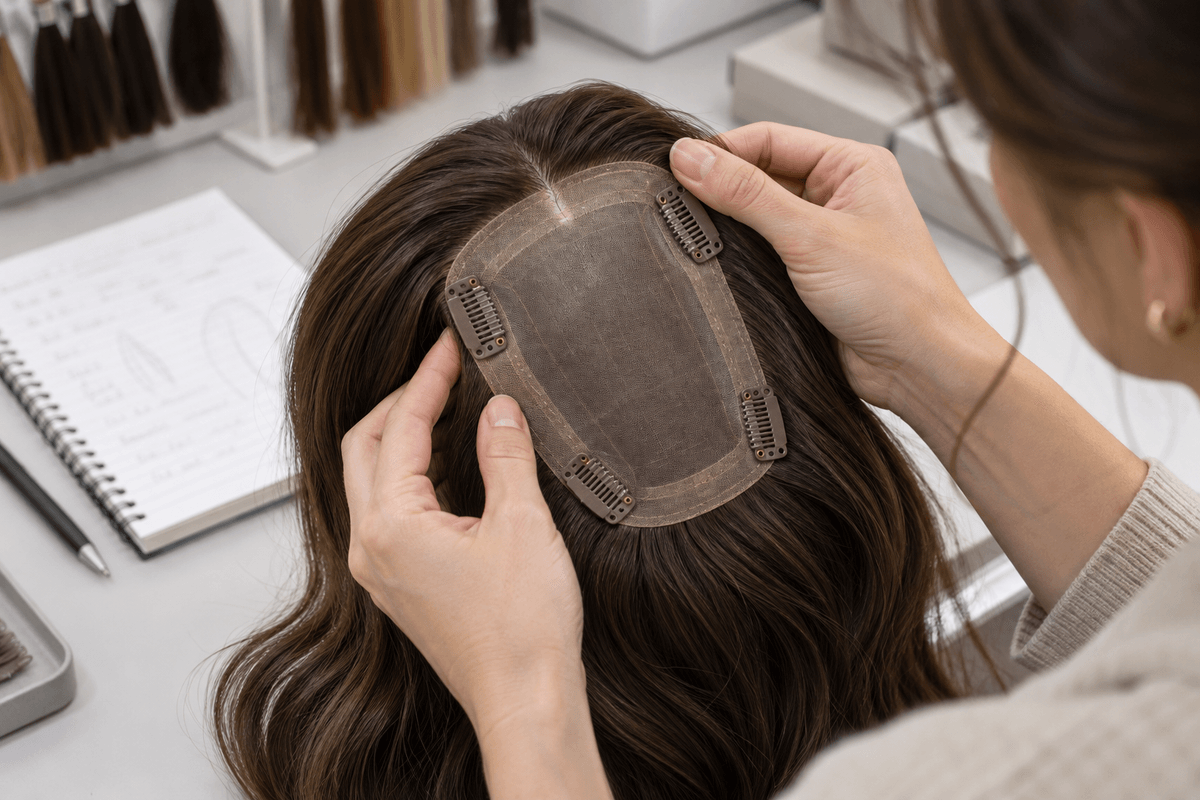
The phrase “raw virgin hair” sounds reassuring. It suggests an untouched starting material, a traceable source, and freedom to style the hair your way. Yet two vendors can use that phrase for products with very different histories. A polished photograph cannot resolve the difference.
Evaluate raw virgin hair vendors by what they can document and how their samples perform. Treat the description as the start of a conversation, then establish the material, processing history, product format, and terms of the actual order. That approach is more useful than choosing a supplier solely because it appears near the top of a ranking.
Start with four separate questions
Ask whether the product is human hair, how it was processed, what the vendor means by its origin description, and whether you are buying loose hair or a finished piece. Those questions address different things. A human hair topper can be useful without being an unprocessed bundle, while an attractive wave pattern does not demonstrate a country of collection.
“Raw,” “virgin,” and “Remy” appear frequently in industry descriptions, but sellers do not always use them consistently. Have the supplier define each term in writing for the exact stock you are considering. Ask specifically about coloring, bleaching, texture setting, coatings, and whether the order will match the sample's stated specification.
Single-donor claims require their own explanation. Do not infer a single donor from consistent color or a tidy bundle. Likewise, cuticle alignment and a processing history are separate questions. If either feature is essential to your service, make it an explicit requirement rather than assuming that another marketing term covers it.
Turn a sales description into an order specification
A strong inquiry makes the finished requirement clear. Tell the supplier what you intend to do with the hair: build a wig, fit extensions, supply a salon, or purchase a ready-to-wear piece. Include the desired texture, usable length, color, quantity, and any processing you expect to perform after delivery.
| Claim or requirement | Evidence to request | What a sample can establish |
|---|---|---|
| Human hair material | Written material declaration for the item | Handling and appearance, not complete authenticity on their own |
| Unprocessed or minimally processed | Explanation of treatments and finishing | Behavior under an agreed care routine |
| Particular collection origin | Traceability information tied to supply | Appearance alone cannot prove geography |
| Repeatable supply | Reorder specification and substitution policy | A baseline against which later orders can be compared |
Avoid a long list of vague superlatives. “Premium,” “luxury,” and a grade number can mean different things across suppliers. A clear material declaration, agreed dimensions, and identifiable product code are easier to check when the parcel arrives.
Test the sample you would actually buy
Order the same product format and specification you plan to reorder. A loose swatch does not show whether a finished wig fits comfortably, and a finished topper does not tell you how a bundle will behave during wig construction. Record the sample code and photograph it before altering anything.
Inspect the lengths and ends in consistent light. Check whether the visible color and texture suit your intended result. For a finished piece, inspect the base, seams, attachment points, and coverage. Assess shedding and tangling with the recommended tools rather than repeatedly pulling at the hair to force a result.
If washing is part of your evaluation, agree on the permitted procedure and its effect on return eligibility first. Use the recommended products, allow the sample to dry fully, and compare it with your initial observations. A single wash provides useful information about that sample; it does not prove a universal lifespan.
Color testing is a different decision. Do not promise a client's target blonde based on a vendor's photograph or a generic human hair label. When color work is essential, have a qualified professional evaluate a small sample under an agreed protocol. Keep any destructive test separate from stock that must remain returnable.
When a finished hairpiece is the better purchase
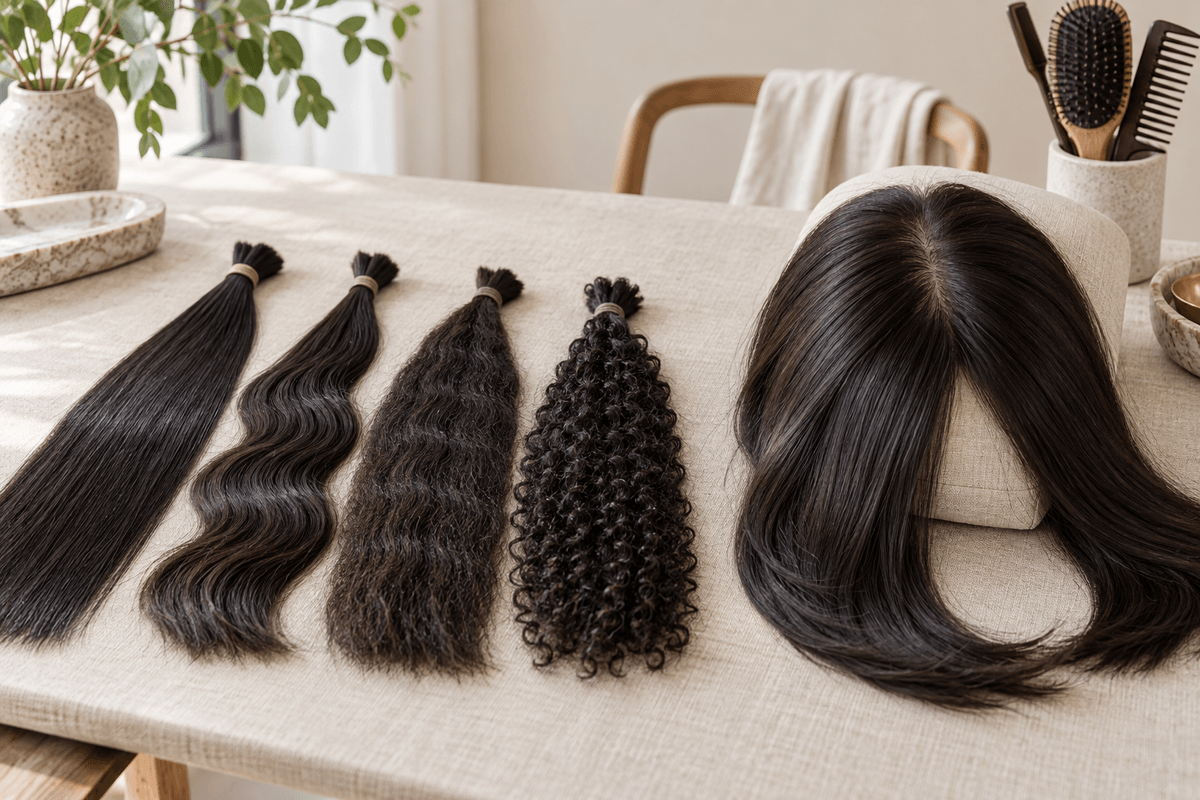
Some shoppers searching for raw hair vendors actually want a natural-looking finished result without commissioning a complete build. In that case, comparing the base, coverage, and color of a ready-made piece may solve the problem more directly.
Comfy Wigs lists the Human Hair Topper FK008 as a human hair topper. It is a relevant starting point when the objective is targeted top coverage rather than loose hair for manufacturing. Ask about base measurements, attachment details, available shades, and suitability for your own hair before choosing it.
The Human Hair Topper FK011 gives you another human hair topper to include in the consultation. Request the same information for both models so the comparison is meaningful. A different model number should prompt questions about the actual construction, not an assumption that one is denser or larger.
For a third finished-piece comparison, review the Human Hair Topper FK014. Its human hair description identifies the broad material category; it does not establish Cambodian, Brazilian, single-donor, raw, or virgin provenance. Choose it for a documented fit and appearance brief, not for an origin story that its listing does not provide.
If you are open to a different material category, the Chestnut Brown Bobo YWLH-57 is described as a human hair and synthetic blend. Its role is a finished bob option, not a substitute for raw human hair stock. That distinction helps you compare real choices without paying for a label you do not need.
Compare the complete transaction
Ask for the cost of the exact specification, sample charges, packaging, delivery, and any customization. Confirm when production or dispatch starts and what happens if a shade or model is unavailable. A lower headline price can be less attractive if it requires an unsuitable minimum quantity or leaves substitutions undefined.
Keep the invoice, sample identifier, written material description, and correspondence together. If something arrives differently from the agreement, those records are more useful than a screenshot of a general quality claim. For larger orders, begin with a manageable pilot and compare more than one piece before expanding.
Your acceptance criteria should cover both hair performance and service. A vendor may provide an attractive sample but struggle to explain a reorder, answer a product question, or resolve a discrepancy. Those operational details matter when the purchase supports appointments or retail commitments.
Questions worth asking before payment
- What does “raw virgin” mean for this exact item, and which treatments has it received?
- Is the material declaration tied to a product code and invoice?
- Which features of my sample are guaranteed to carry through to the order?
- What care or testing would affect return eligibility?
- How will substitutions, shortages, and specification changes be handled?
- If I want a finished piece, which measurements and photographs should I supply?
The best buying decision is the one that matches your intended use with evidence you can inspect. For finished toppers and wigs, start a focused conversation with Comfy Wigs using the model, coverage, color, and construction you want. For unprocessed raw stock, require a separate sourcing specification and confirmation that the supplier actually provides it.